News
What IT leaders are reading, from the sources they trust, plus articles written for this site. Stories from other sites open in a new tab.
-
China Defends DeepSeek After US Ban of Its AI From Government Systems (opens Security Week in a new tab)
The DHS said agencies should remove DeepSeek products as well as third-party products and services developed using DeepSeek from their IT systems. The post China Defends DeepSeek After US Ban of Its AI From Government Systems appeared first on SecurityWeek.
-
Microsoft expands sovereign cloud offerings as data control concerns grow (opens CIO in a new tab)
Microsoft expanded its sovereign cloud offerings on Tuesday, adding new security, governance and AI capabilities as customers, particularly in Europe, demand greater assurance over where data is stored, who can access it and how critical services operate during disruptions. The announcement builds...
-
Bud Light Boycotters Are Still Waiting for Their ‘Woke-Free’ Beer (opens Wired in a new tab)
Ultra Right Beer, a brand launched in 2023 by MAGA political consultant Seth Weathers, has vanished from the internet with many deliveries unfulfilled.
-
PHP2Shell: What Actually Protects You Before the 14:00 UTC PHP RCE Patch, and What Doesn't (opens The Hacker News in a new tab)
You cannot fully block the two critical PHP flaws called PHP2Shell before today's fix, and the one setting being passed around as a workaround is not enough on its own, the security firm that suggested it now says. PHP will release the fix at 14:00 UTC on October 21 for two flaws it rates 9.2 out...
-
The Harness Is the Hard Part of Agentic Pentesting (opens The Hacker News in a new tab)
An AppSec team can point an AI agent running on a general-purpose model at its own web apps with little setup. Sure, the model writes the attacks. But everything that makes those attacks safe to run against production and worth acting on afterward lives in the harness around the model. The harness...
-
Attackers Hijacked Over 300 Tor Exit Relays to Intercept SSH Connections (opens The Hacker News in a new tab)
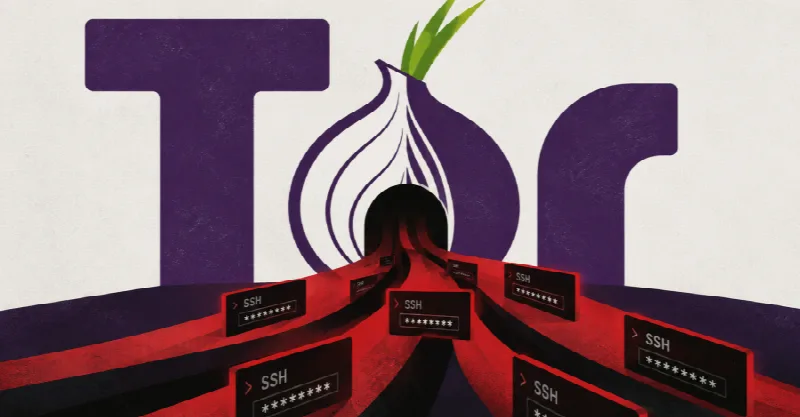
Attackers took control of more than 300 Tor exit relays in early October and used them to redirect SSH connections to servers that stole login passwords, a researcher found. Exit relays are the last hop in a Tor circuit, where traffic leaves the network for its destination. Only a password login to...
-
OpenAI Invests in Startup That Uses Brain Implants to Detect Cancer (opens Wired in a new tab)
It’s the latest in a growing wave of bets that AI companies are making on brain data.
-
Google, Mozilla revoke eMudhra intermediates after private key compromise (opens CSO Online in a new tab)
Private keys associated with eight intermediate certificate authorities operated by Indian digital trust provider eMudhra have been compromised, potentially allowing attackers to forge trusted certificates and impersonate websites or services, according to Google and Mozilla. “On 17th October @...
-
Critical PHP Vulnerabilities Leaked Ahead of Scheduled Security Patches (opens Infosecurity Magazine in a new tab)
Two critical vulnerabilities in PHP were leaked one day before their scheduled disclosure and security patches
-
NetApp partners with emma to to bring sovereign AI to European businesses (opens IT Pro in a new tab)
A new joint solution pairs NetApp’s high-performance storage capabilities with emma’s cloud operations platform and GPU capacity
-
NetApp partners with emma to to bring sovereign AI to European businesses (opens IT Pro Cloud in a new tab)
A new joint solution pairs NetApp’s high-performance storage capabilities with emma’s cloud operations platform and GPU capacity
-
HPE is taking AI to the moon (opens IT Pro in a new tab)
The HPE Spaceborne Computer-4 will be used to conduct AI and HPC tests on the lunar surface
-
The Google Cloud outage explained (opens IT Pro in a new tab)
The eight-hour Google Cloud outage hit a range of organizations including banks and delivery services
-
Chinese AI Model Writes More Hackable Code When Told It’s for US Contractor (opens Security Week in a new tab)
Tasked with writing an application for a US defense contractor, the model made the code 19% more likely to be hackable. The post Chinese AI Model Writes More Hackable Code When Told It’s for US Contractor appeared first on SecurityWeek.
-
The Best Hearing Aids I’ve Tested (2026): Jabra, Resound, Apple, and More (opens Wired in a new tab)
These WIRED-tested devices will help you hear sounds more clearly. Never miss out on a dinner conversation again.
-
She Was the DEA’s Premier Crypto Detective. The Clues Led Straight to Her Own Family (opens Wired in a new tab)
To escape the chaos of her Russian childhood, Lili Infante became an American law enforcement prodigy. She pioneered the DEA’s investigations of the dark web—never suspecting who she’d find hiding there.
-
When everyone can build, the CIO’s job gets bigger (opens CIO in a new tab)
For most of the last three decades, the technology organization’s authority rested on something simple: it held capabilities nobody else had. If the business wanted software, it came to IT. That arrangement no longer holds. A marketing team can now assemble a working customer-facing prototype over...
-
Building a trust architecture for your new team (opens CIO in a new tab)
CIOs bring a lot to their new jobs: decades of leadership, transformation, pattern-recognition, and outcomes. But none of that matters in your new job. During a time of generalized uncertainty, your team — and every stakeholder — needs to trust you more than anything. But how do you build that...
-
Autonomy creep: how AI quietly gains more authority than CIOs intend (opens CIO in a new tab)
Few CIOs are likely to suddenly decide to give an AI agent broad authority over corporate systems. The more likely path to autonomy is far less dramatic. An agent starts with a narrow task. It proves useful, so another system is connected. It then needs more data, so another permission is added...