News
What IT leaders are reading, from the sources they trust, plus articles written for this site. Stories from other sites open in a new tab.
-
The AI Agent Nobody Owns: Watch Expert Webinar On Your Newest Insider Threat (opens The Hacker News in a new tab)
Right now, there is probably an AI agent running on a laptop somewhere in your network. It stores API keys and database passwords, can access your internal systems, and works without anyone watching. Nobody reviewed its access. Nobody owns it. If an employee had that much reach with that little...
-
XTIUM expands XTAI with centralized AI governance and cost management (opens Help Net Security in a new tab)
XTIUM has released the latest version of XTAI (XTIUM Trusted AI), expanding its AI Service Platform with XTAI Orchestrator. The new governance platform brings together managed AI services, AI-powered voice, custom XTAI Agents, managed networks, and managed cloud. Building on XTAI’s initial focus on...
-
SentinelOne brings runtime threat detection and response to AI agents (opens Help Net Security in a new tab)
SentinelOne has unveiled Singularity Agentic Detection and Response (ADR), a new offering that discovers AI agents, enforces what agents are allowed to do, monitors agent behavior in depth, and detects and stops unintended and malicious activity in real time. Bringing together visibility and...
-
Broadcom adds real-time scam detection to 3-D Secure authentication (opens Help Net Security in a new tab)
Broadcom has announced the launch of Arcot Scam Defense, a new feature of Arcot by Broadcom, designed to block social engineering fraud during card-not-present (CNP) transactions. “Financial institutions are experiencing broad increases in fraud attempts driven by sophisticated, AI-enhanced social...
-
Railway Says Intruder May Have Accessed Customer Secrets, Urges Credential Rotation (opens The Hacker News in a new tab)
Platform-as-a-Service (PaaS) provider Railway on Wednesday disclosed "anomalous activity" related to systems that store customer environment variables. Upon further investigation, the company found that an unauthorized third party may have gained access to encrypted environment variables, and, in...
-
Claude Security can now spot vulnerabilities that reappear in code (opens Help Net Security in a new tab)
Anthropic has updated Claude Security with ongoing code scanning and automatic fix tracking to help security teams monitor vulnerabilities as software changes. The service scans codebases for vulnerabilities and suggests patches for review. It is powered by the company’s full family of models...
-
Best Microsoft Surface Laptop (2026): Which Models to Buy and Avoid (opens Wired in a new tab)
With pricing in flux and new models available, here’s which Surface Laptop and Surface Pro to buy.
-
Microsoft: Chinese State Actor Used AI to Compromise ConnectWise Tenants (opens Infosecurity Magazine in a new tab)
Microsoft said it has observed threat actor activity in multiple ConnectWise customer environments, with the attackers leveraging the ARTEX agentic AI platform
-
Enterprises don’t need artificial general intelligence. They need artificial specific intelligence (opens CIO in a new tab)
MIT’s finding that 95% of enterprise AI pilots fail to show measurable profit has been quoted at length, and the conclusions drawn from it are always the same: the models aren’t good enough yet, or enterprises don’t know how to use them. I don’t think either holds up. The problem starts earlier...
-
Cognizant commits to training 18K Google Cloud AI specialists (opens CIO Dive in a new tab)
The IT services firm created the Gemini Frontier Capability Group to house teams of forward deployed engineers.
-
Attackers abuse legitimate platforms to deliver phishing emails that pass authentication checks (opens Help Net Security in a new tab)
A Dell order confirmation lands in your inbox and it looks pretty legitimate: it comes from Dell’s order domain, passes DKIM and DMARC checks, uses Dell’s real template, and confirms a $736.09 purchase of Microsoft Project Standard 2024 that you never made. Under “Ship To,” where an address should...
-
Veeam launches new global program for sovereign service providers (opens IT Pro in a new tab)
The initiative introduces a new competency to help customers identify local providers with the expertise to address data sovereignty requirements
-
Dell says sort out your infrastructure or risk scuppering AI production projects (opens IT Pro in a new tab)
A new Dell report warns that projects are being delayed by infrastructure, regulatory, and security concerns
-
Splunk, SolarWinds Release Fresh Security Updates (opens Security Week in a new tab)
Patched vulnerabilities could allow attackers to execute code, elevate privileges, and leak sensitive information. The post Splunk, SolarWinds Release Fresh Security Updates appeared first on SecurityWeek.
-
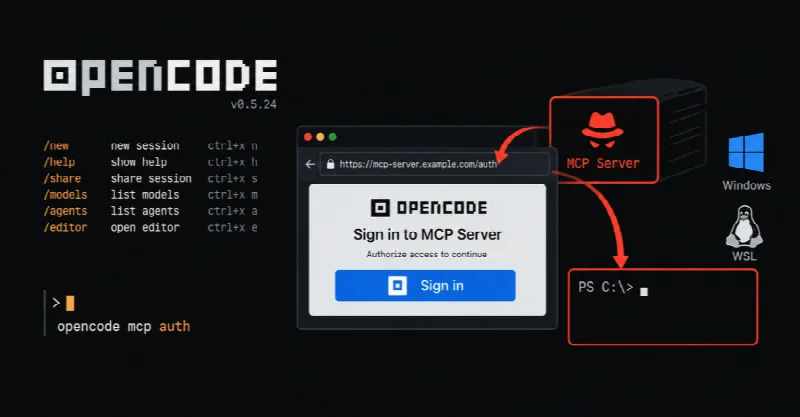
OpenCode Flaw Lets Malicious MCP Servers Execute Code During Sign-In on Windows and WSL (opens The Hacker News in a new tab)
A flaw in the OpenCode AI coding agent allowed a malicious or hijacked MCP server to run code on a developer's Windows or WSL machine when the developer signed in. OpenCode connects to MCP (Model Context Protocol) servers to add outside tools, and such code would run with the developer's own...
-
Meta’s Ad Sales Are Suffering Now That Europeans Can Pick Less Personalization (opens Wired in a new tab)
An earnings briefing on Wednesday revealed ad revenue has slowed since the European Union introduced the Less-Personalized Ads model at the beginning of this year.
-
Zoom’s new features want to bridge glaring business context gaps (opens IT Pro in a new tab)
New tools aim to “turn conversations into completed work”, according to Zoom CEO Eric Yuan
-
I Worked for a Whole Day Using Only the iPhone Duo. Here’s How It Went (opens Wired in a new tab)
A portable keyboard and kickstand make it a viable emergency workstation—even if iOS still gets in the way.
-
What the PHP2Shell vulnerability means for Fortinet, Cisco and Palo Alto customers (opens Help Net Security in a new tab)
Palo Alto Networks confirmed that all versions of PAN-OS and Panorama are affected by PHP2Shell, a pair of critical PHP vulnerabilities that let an attacker run code on a web server without logging in. Palo Alto has not shipped fixed PAN-OS releases yet. Fortinet and Cisco published their own...
-
They Believe 2020 Was Stolen. They Could Be in Charge of Elections in 2028 (opens Wired in a new tab)
A host of election-denying candidates are running for attorney general in states across the country.