News
What IT leaders are reading, from the sources they trust, plus articles written for this site. Stories from other sites open in a new tab.
-
Ukrainian ransomware hacker sentenced, $11 million reward offered for co-conspirator (opens Help Net Security in a new tab)
A Ukrainian national who participated in ransomware attacks targeting hospitals, government entities, law firms, and other businesses was sentenced to five years and 10 months in prison. Artem Stryzhak, 36, pleaded guilty in December 2025 to two counts of conspiracy to commit fraud, extortion, and...
-
Gheist turns GitHub Actions into a secret extraction service (opens CSO Online in a new tab)
A threat actor dubbed Gheist is turning compromised GitHub accounts into credential-harvesting platforms. By planting malicious GitHub Actions workflows in private repositories, the attackers can expose repository and environment secrets, then retrieve them through GitHub APIs before deleting...
-
Amazon Adds an Alexa Photo Frame and a Bedside Clock to Its Echo Family (opens Wired in a new tab)
The new Echo Studio also gets a camera, and the Echo Show 16 debuts an AI-generated Alexa interface.
-
China-Linked Hackers Exploit PHP2Shell to Root Firewalls (opens Security Week in a new tab)
The attackers chained PHP2Shell and Fragnesia exploits and hacked two servers of a US government-affiliated organization. The post China-Linked Hackers Exploit PHP2Shell to Root Firewalls appeared first on SecurityWeek.
-
Trusting Unsloth’s trust setting could mean executing malicious code (opens CSO Online in a new tab)
AI developers may have a security setting enabled and still end up running attacker-controlled code. Pillar Security has disclosed a high-severity vulnerability in Unsloth’s model loader that could allow arbitrary Python code execution when processing a maliciously crafted model configuration...
-
US IT leaders hit out at Microsoft licensing practices (opens IT Pro in a new tab)
Technology leaders across the US say they're choosing Azure mainly to avoid fees, and are calling for regulators to step in
-
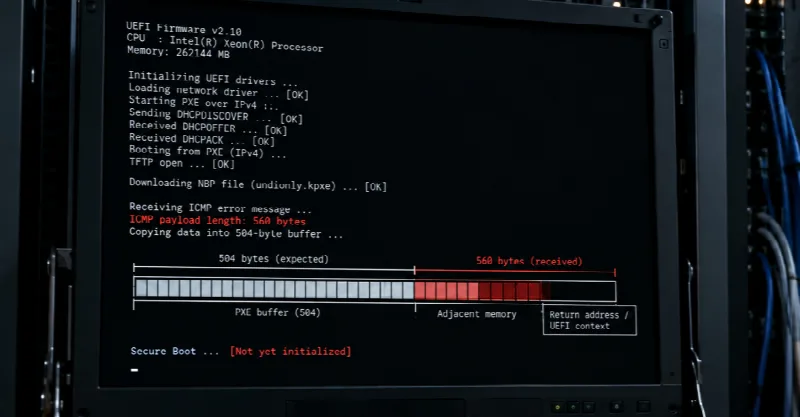
Critical 16-Year-Old UEFI Flaw Can Run Code Before Secure Boot on Network-Booting Servers (opens The Hacker News in a new tab)
A critical 16-year-old flaw in EDK II, the open-source code that most hardware makers use to build UEFI firmware, can allow an attacker to run code on a machine before its operating system loads, but only while the machine is booting over the network. UEFI firmware is the software that runs first...
-
Wazuh and AI for Enhanced SOC Workflows (opens The Hacker News in a new tab)
Artificial Intelligence (AI) has become one of this decade's defining technologies. From healthcare and finance to manufacturing and education, organizations increasingly rely on AI to automate repetitive tasks, uncover patterns hidden within large datasets, and support faster decision-making...
-
Adobe Fixes 8 Critical Campaign Classic Flaws Allowing Code Execution and Security Bypass (opens The Hacker News in a new tab)
Adobe has released patches to address multiple critical security flaws in Campaign Classic that, if successfully exploited, could result in arbitrary code execution, security feature bypass, and privilege escalation. The list of eight vulnerabilities is as follows - CVE-2026-104351 (CVSS score...
-
Sauerkraut at Every Meal? These Fermentation Fanatics Tried That Long Before MAHA (opens Wired in a new tab)
The annual Portland Fermentation Festival took place last week in Oregon, at a time when sauerkraut, kimchi, and other funky foods are in the social and political spotlight.
-
Your AI agent learned a better way. Who approved the change? (opens CIO in a new tab)
Imagine a support team working through complaints after a service outage. Its refund policy normally requires an eligibility review. For this incident, an authorized manager approves an exception: customers on the verified outage list may receive up to $100 without individual review, through...
-
AI regulation push gains steam ahead of midterms (opens CIO Dive in a new tab)
Reports of AI agents accessing bank accounts mark the latest in a string of developments putting pressure on lawmakers to act.
-
Long-Hidden Flaws Patched in EPICS Research Facility Control Software (opens Security Week in a new tab)
Four EPICS Base flaws found by an autonomous system could let attackers crash processes at particle accelerators and fusion labs. The post Long-Hidden Flaws Patched in EPICS Research Facility Control Software appeared first on SecurityWeek.
-
Pornhub Stars Want to Teach You How to Make Dinner (opens Wired in a new tab)
Faced with censorship and anti-porn laws, the adult site is encouraging creators to embrace cooking, gaming, podcasting, and other safe-for-work content.
-
Information overload is harming enterprise productivity (opens IT Pro in a new tab)
Workers are tired of switching between different platforms to keep up to date with company activities
-
Apple AirPods Max 2 Are $100 Off Ahead of Black Friday (opens Wired in a new tab)
If Apple headphones have been sitting on your wish list, now might be the time to buy ahead of the holiday rush.
-
Nobody Trusts the Security Questionnaire. We Rely on It Anyway. (opens Security Week in a new tab)
The process that gates nearly every B2B deal is a self-assessment the sender distrusts and the receiver accepts. There is finally a better basis for trust between companies. The post Nobody Trusts the Security Questionnaire. We Rely on It Anyway. appeared first on SecurityWeek.
-
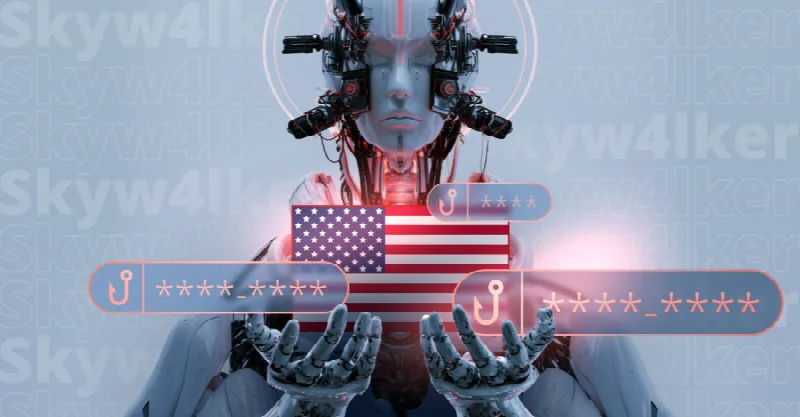
American Organizations Under Attack: Skyw4lker Device Code Phishing Campaign Exposed (opens The Hacker News in a new tab)
Modern phishing campaigns can compromise American businesses without relying on traditional credential theft. Attackers can abuse legitimate cloud services, authentication mechanisms, and trusted business workflows to gain access to corporate accounts while leaving fewer obvious signs behind...
-
Macmillan Staff Say the Publisher Threw a Party for a Workplace AI Assistant That Was Later Killed (opens Wired in a new tab)
Workers tell WIRED that NOA—or “No Ordinary Assistant”—was unhelpful. Bestselling authors also say AI is ruining their relationships with Big Five publishers.
-
When prevention fails: Why cyber resilience is the next big test of trust (opens CSO Online in a new tab)
Imagine arriving at work on a Monday morning to find employees cannot log in, customer service is unavailable, and critical business applications have stopped working. Security alerts are flashing. The IT team is investigating. Business leaders want to know when operations will resume. Then comes...